
Newscom Editorial Outlook: European Wildfires, the Commonwealth Games, and a Historic Tour de France Finish | July 27
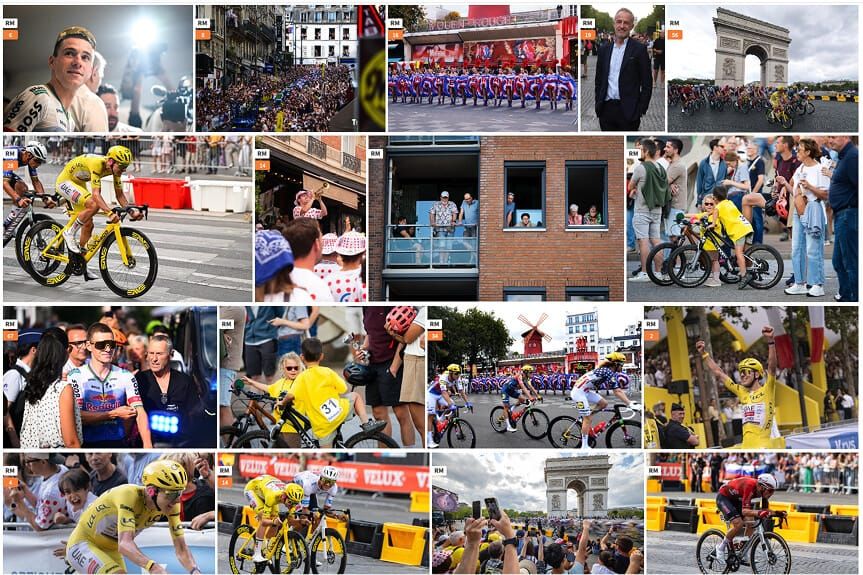
This week’s editorial landscape brings together three very different visual stories: a major wildfire emergency affecting communities across parts of Europe, the energy and international character of the Commonwealth Games in Glasgow, and a historic Tour de France victory completed on the streets of Paris.
For editors, publishers, and agencies, each story presents a distinct imagery need. The wildfire crisis calls for urgent reporting, human impact, and environmental context. The Commonwealth Games offer live competition, national identity, celebration, and host-city atmosphere. The Tour de France provides both immediate results coverage and a broader visual record of endurance, landscape, spectatorship, and sporting legacy.
Together, they offer a useful editorial mix for news desks planning coverage across breaking news, international sports, features, and follow-up analysis.
European Wildfires: Crisis, Evacuation, and Emergency Response
Severe wildfires across France and Spain continue to produce some of the week’s most urgent news coverage. Communities have faced widespread evacuations as firefighters and emergency personnel work to control large, fast-moving blazes intensified by heat, dry conditions, and changing winds.
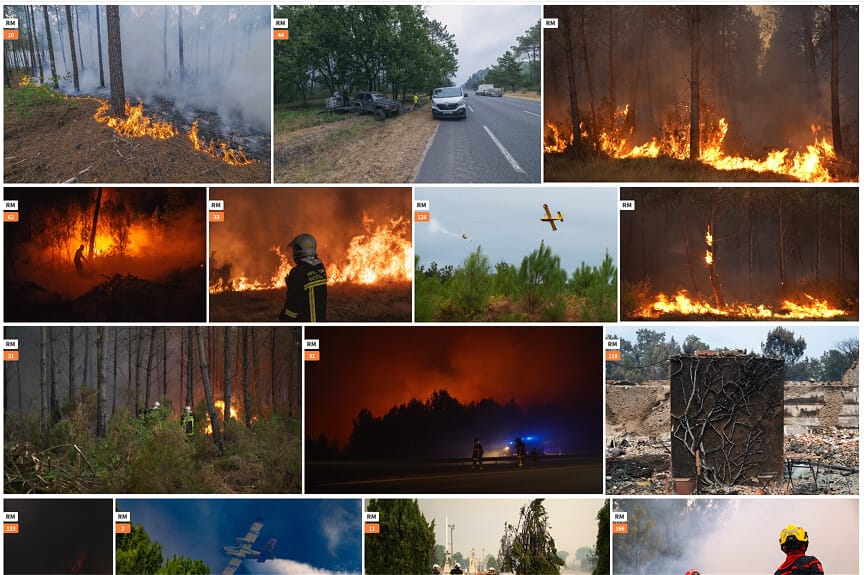
In southwestern France, the scale of the emergency has brought national attention to firefighting operations, displaced residents, threatened communities, and the growing challenge of managing extreme fire conditions. Spain has also confronted major fires and extensive evacuations, adding to a wider European story involving public safety, climate resilience, tourism, agriculture, and emergency preparedness.
The most immediate images are often dramatic: walls of flame, dense smoke, firefighting aircraft, burning vegetation, and emergency crews working near homes and roads. But the complete editorial story extends well beyond the fire line.
Strong visual angles include:
- residents evacuating threatened areas
- families arriving at temporary shelters
- firefighters and military personnel at work
- aircraft dropping water or fire retardant
- road closures, warning signs, and restricted areas
- smoke hanging over towns, beaches, or transport routes
- homes, forests, vehicles, and farms damaged by fire
- residents returning to assess the aftermath
- community volunteers supporting displaced people
- political leaders visiting emergency coordination centers
These images can serve a wide range of coverage. Breaking-news articles may focus on evacuations, containment efforts, and changing fire conditions. Longer-form reporting may examine the personal toll on residents, the economic effect on tourism and agriculture, or the challenge of preparing European communities for increasingly severe fire seasons.
Editors may also need broader contextual imagery. Aerial photographs, environmental details, dry vegetation, firefighting infrastructure, and before-and-after views can help explain not only what happened, but why particular communities and landscapes were vulnerable.
The strongest wildfire coverage generally balances scale with individual experience. Wide images communicate the size of the emergency, while photographs of residents, responders, animals, homes, and personal belongings show what the crisis means at a human level.
Suggested searches:
France wildfires • Spain wildfires • European wildfire evacuation • firefighters France • wildfire aircraft • Bordeaux wildfire • Madrid wildfire • wildfire smoke Europe • wildfire aftermath • emergency shelter wildfire
Commonwealth Games: Competition and International Energy in Glasgow
The Commonwealth Games are underway in Glasgow, bringing thousands of athletes from 74 nations and territories together across a streamlined program of sports and Para sports. Competition continues through August 2, creating an ongoing flow of action, medal moments, athlete stories, and crowd imagery.
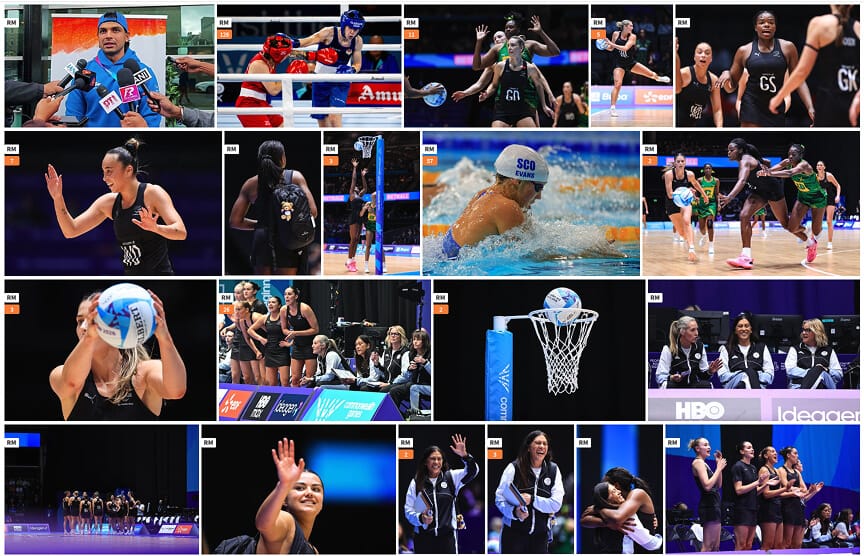
The Games offer considerable visual variety because their editorial value is not limited to the most prominent medal events. Competition images are central, but the wider story includes national teams, opening-ceremony spectacle, Glasgow landmarks, volunteers, spectators, cultural identity, and the personal experiences of athletes representing very different countries and sporting traditions.
The opening ceremony established that tone with a highly theatrical appearance by King Charles III and Queen Camilla, alongside imagery referencing Scottish landmarks and popular culture. Those scenes created a distinctive opening visual package, while the days that followed shifted attention toward competition and medal results.
Useful imagery categories include:
- athletics and Para athletics
- swimming and Para swimming
- artistic gymnastics
- boxing and judo
- netball and 3x3 basketball
- cycling, bowls, and weightlifting
- medal ceremonies and podium celebrations
- athletes reacting after wins or defeats
- national flags and team uniforms
- supporters inside venues and fan zones
- volunteers and event staff
- royal and ceremonial appearances
- Glasgow streets, venues, and recognizable city settings
Para sport is an especially important part of the visual narrative. Images from integrated competition can support reporting on athletic performance, accessibility, representation, and the Games’ broader identity. The 2026 program includes six Para sports within the wider schedule, giving editorial teams opportunities to cover Para athletes as a central part of the event rather than as a separate or secondary story.
There are also many strong feature angles beyond results and medal counts. Editors may look for athletes competing at a home Games, families watching from the stands, competitors from smaller nations, emotional returns after injury, or athletes balancing sport with work, education, and family life.
Glasgow itself is part of the story. Venue exteriors, crowds moving through the city, Scottish flags, cultural performances, fan areas, and recognizable urban settings help place the competition in a broader geographic and cultural context.
For agents and customers serving regional markets, national representation is also valuable. A competitor who receives relatively little international attention may still be a significant story in their home country. A broad search strategy that includes individual nations, disciplines, and athletes can therefore uncover imagery with strong local relevance.
Suggested searches:
Glasgow Commonwealth Games 2026 • Commonwealth Games athletics • Commonwealth Games swimming • Para sport Glasgow • gymnastics Commonwealth Games • Commonwealth Games medal celebration • Glasgow sports crowd • Commonwealth Games opening ceremony • Commonwealth Games national team
Tour de France: Pogačar Joins Cycling’s Five-Time Champions
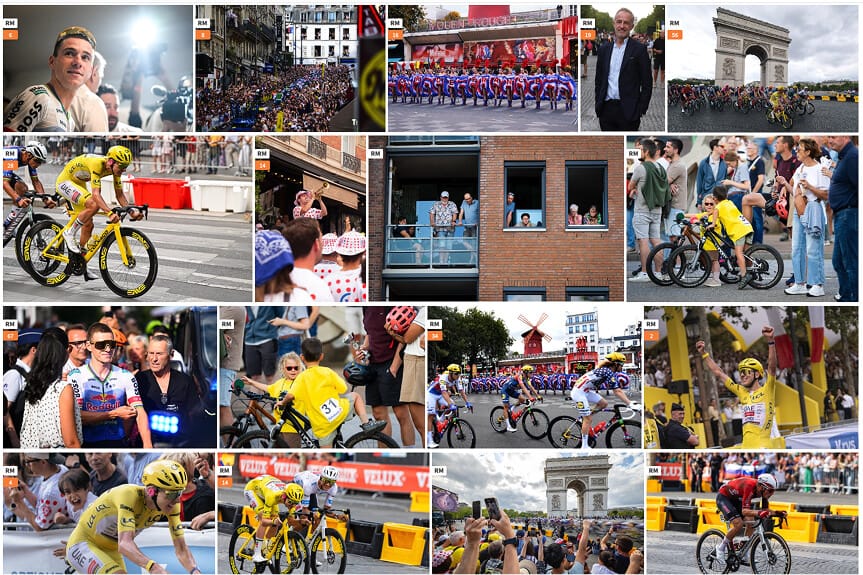
The 2026 Tour de France concluded in Paris with Tadej Pogačar winning the general classification for the fifth time. He finished more than six minutes ahead of Remco Evenepoel, joining the small group of riders who have won cycling’s most famous race five times.
That achievement gives editors several possible storylines. The immediate result is one: Pogačar in the yellow jersey, the final podium, team celebrations, and the closing stage in Paris. But the wider visual story includes three weeks of racing, difficult mountain stages, changing terrain, team tactics, roadside crowds, crashes, exhaustion, weather, and the distinctive traditions of the Tour.
The final stage provides highly recognizable Paris imagery, including the peloton arriving in the capital and racing near the Champs-Élysées. Mathieu van der Poel won the final stage, while Pogačar’s overall victory confirmed his place among the event’s most successful champions.
Strong visual angles include:
- Pogačar wearing or celebrating in the yellow jersey
- the final podium and team presentation
- riders entering Paris
- Champs-Élysées and central Paris landmarks
- sprint action during the closing stage
- mountain attacks and steep climbing stages
- riders descending through alpine or Pyrenean scenery
- team cars, mechanics, and race support
- cyclists receiving treatment or recovering after stages
- roadside spectators, flags, costumes, and fan gatherings
- aerial views of the peloton moving through French landscapes
- archival comparisons with previous five-time champions
The Tour is particularly effective for editorial imagery because it combines elite competition with a strong sense of place. The race moves through cities, villages, mountains, farmland, historic sites, and major tourist destinations. A single stage can generate sports photographs, scenic travel imagery, local cultural details, and broad crowd scenes.
The imagery can therefore support much more than a race recap. Publishers may use it for stories about French tourism, cycling participation, sports science, athlete endurance, sponsorship, national identity, environmental conditions, or the economics of hosting major sporting events.
Pogačar’s fifth victory also creates opportunities for historical and comparative coverage. Editors may seek archival images of Eddy Merckx, Bernard Hinault, Miguel Indurain, or Jacques Anquetil, along with images from Pogačar’s previous Tour victories. A visual timeline can help place the 2026 result within the longer history of the race.
Additional interest may also turn toward what comes next. The women’s Tour de France begins August 1, giving cycling desks another immediate editorial opportunity and allowing publishers to transition from the conclusion of the men’s event into a new stage of major international cycling coverage.
Suggested searches:
Tour de France 2026 • Tadej Pogacar yellow jersey • Tour de France Paris finish • Champs-Élysées cycling • Tour de France podium • Tour de France crowds • Tour de France mountain stage • Tour de France aerial peloton • Tour de France historic winners
Three Stories, Three Different Visual Needs
These three topics work well together because each demands a different visual language.
The European wildfires require urgency, scale, and human impact. Editors need imagery that communicates danger and emergency response while also showing what displaced residents and affected communities are experiencing.
The Commonwealth Games are driven by movement, color, emotion, and international participation. Strong coverage combines competition with national identity, personal athlete stories, spectators, and the atmosphere of Glasgow.
The Tour de France offers spectacle and legacy. The final result is important, but so are the landscapes, crowds, physical effort, team dynamics, and historical comparisons that give the race its broader editorial significance.
For photo buyers, the common lesson is that the strongest coverage rarely comes from selecting only the most obvious headline image. A complete visual package usually includes:
- a defining lead image
- wider contextual photographs
- human reactions and details
- location-setting imagery
- supporting images for analysis and follow-up stories
- archival material when the event has historical significance
That broader approach gives editors more flexibility across homepages, print layouts, newsletters, galleries, social channels, and later feature coverage.
Find the Right Images for This Week’s Coverage
Whether you are covering emergency response in Europe, building a multi-sport package from Glasgow, or looking back at a historic Tour de France, Newscom can help you identify the images that best fit your editorial needs.
Search the Newscom archive using the suggested terms above, or contact us for a custom-curated lightbox built around your publication, market, or upcoming coverage.